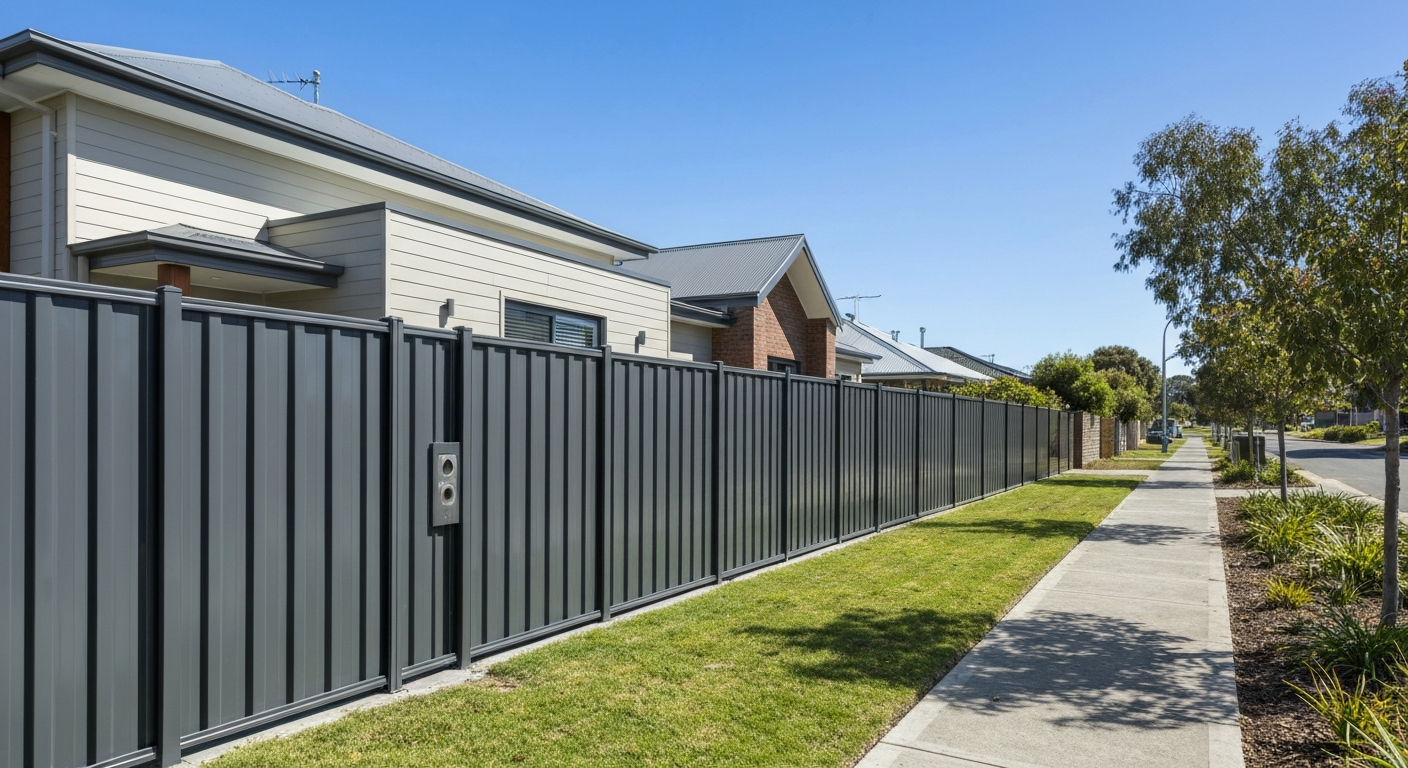
Fence Installer Melbourne: Fixing Loose Rails and Posts
A fencing is just one of those things individuals see primarily when it stops doing its task. The excellent areas hold steady via winter season wind, summer warmth, and the occasional "can you just lean that ladder there?" moment. The loosened ones inform on themselves fast. A rail starts to rattle underfoot, a blog post looks slightly out of plumb, and soon you can push the fence with your palm and feel it move like a spring.
If you remain in Melbourne, you'll likewise understand the pattern. Hefty rain days swell timber, after that a few completely dry weeks diminish it back just enough to loosen screws and nails. Include yard movement from children, canines, gateways slamming, and the occasional ute bump on the border, and fence repair services can turn from "small fix" right into "why is the whole point leaning?"
This is where the fence installer Melbourne approach matters. Not in a marketing sense, but in the useful feeling of having seen the very same failing modes a hundred times and recognizing which ones are really reparable without restoring the entire fence line.
Below is just how I think about repairing loosened rails and posts, what usually created the trouble, and what you can anticipate from a strong fencing installer in Melbourne that treats it like an architectural work, not an aesthetic one.
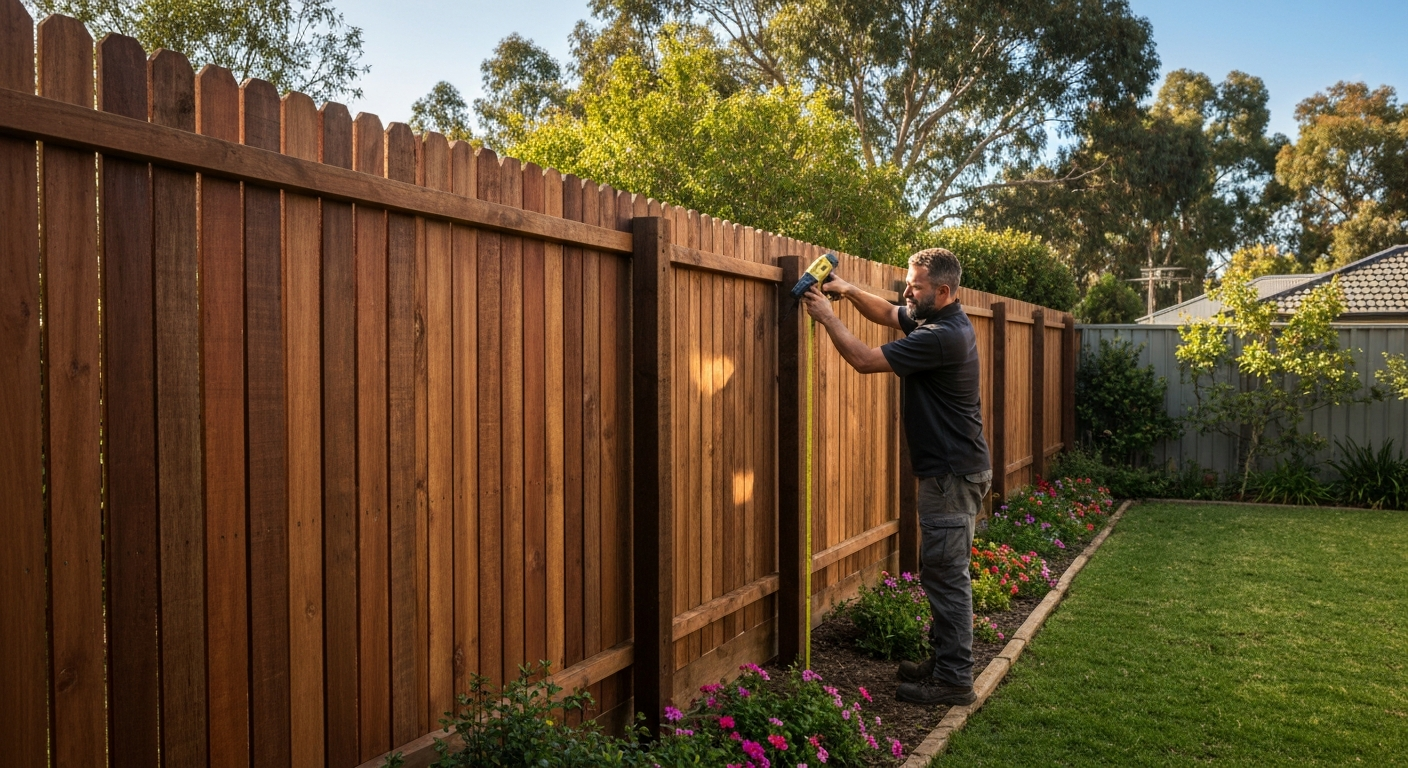
The initial point I check out: what is really loose?
People frequently claim, "My fencing rail hangs," yet when you get close, it's normally more certain than that. A loose rail can mean:
- the rail bolts have stopped working (corrosion, splitting timber, incorrect screw length, old nails)
- the blog post has moved in the ground (rot at the base, bad setup depth, soil washout)
- the whole section is out of placement (blog posts drawing as a result of stress, gateway pressure, border slope)
I normally begin with a mindful stroll along the fence, after that a gentle push at various points. If the activity is neighborhood and the post feels company, you're most likely taking care of rail accessories. If the blog post itself changes, the repair work needs to address the blog post, not just tighten hardware.
The factor this issues is straightforward: tightening up a loosened rail onto a message that is slowly moving only postpones the unpreventable. You could repair the rattle today and be back there once more after the following climate cycle.
On wood fences, I additionally look for rot lines at the level where the rail rests. Rot commonly shows up where water traps behind a rail or where paint or discolor coverage breaks down. If the post timber is soft because location, the rail will maintain falling short even if you use the "ideal" screws available.
Common root causes of loosened rails and blog posts in Melbourne yards
Melbourne weather is a big component of it, yet it's seldom just rain. The majority of loose rail and message concerns come from a mix of installment choices and ecological wear. From experience, these are the typical suspects:
First, blog posts set also superficial or without enough concrete assistance. Wood messages can endure a lot, but they require security and drainage. If water can merge around the base, rot starts earlier than you would certainly anticipate. Then, also if the leading rail looks penalty, the article can gradually lean as the surrounding soil shifts.
Second, stress from straight runs and gates. A fence line is supposed to resist side lots, however it's not a stiff concrete wall surface. If an entrance is pulling on the frame, or if there's been an uneven force from lawn equipment or a vehicle, the fence can rack somewhat. When the framework racks, rail brackets and fasteners take tension they weren't developed for, and loosen over time.
Third, equipment mismatch. Old fencings might have used nails that were great for decades. When those stop working, individuals in some cases replace them with something that "appears similar" yet isn't. Brief screws in thick wood, bolts put near the side (where wood divides), or stainless screws made use of in such a way that catches wetness can all bring about quicker failing. Hardware isn't just a detail, it's a system.
Fourth, wood movement itself. In summer, timber reduces and in wintertime it swells. If the fence was mounted tight, with rails screwed in under stress, the seasonal movement can work against it. You can hear it in some fencings, a faint creak that comes to be a rattle when the motion cycles repeat.
Fifth, limit greenery and splashback. Creeping plants growing against articles can hold moisture. Sprinklers can wet one side continually. Soil splashes throughout tornados can put on finishings near the base. Every one of that adds up, particularly on older fences.
When I fixing loose rails and blog posts, I attempt to recognize which of these is driving your certain issue. That's what divides a "fast fix" from a repair service that holds.
Safety and access: the component individuals rush and regret
Before touching devices, I check the fence line for apparent dangers. It could appear standard, yet it's where problems start.
Gates are the noticeable danger. If eviction hangs, a tiny movement can let it swing or drop. That can wound somebody and it can likewise bend rails if you secure or brace the wrong point.
I likewise watch for underground solutions. In Melbourne, several properties have courses of services that aren't always where you 'd anticipate. If you're preparing to re-set an article and require to dig, it deserves examining locations first. Even if an area is old and the fence post seems to be exactly where you assume, soil movement with time can hide what's below.
And then there's the functional access problem: fencings are rarely set up on tidy, level ground with clear space around them. If you're working near a boundary with a narrow side return, the means you set up braces issues. If you can not work securely, you won't do the fixing properly.
An excellent fencing installer will certainly treat these checks as regular. Not because they're significant, but because time conserved by skipping security is frequently simply lost later.
Repair strategy: tighten what can be tightened, restore what ca n'thtmlplcehlder 56end.
The key inquiry in a lot of fencing repair work is this: can the existing framework hold its shape once you remedy the fasteners, or does it need reinforcement or re-setting?
When a rail is loose but articles are solid
If the blog posts really feel solid and the rail just relocates at the add-on factors, the repair is typically straightforward. The common repair is to get rid of the unsuccessful fasteners, examine the rail finishes and the blog post surface area for splitting or rot, and afterwards reattach making use of proper, corrosion-resistant hardware.
In technique, I look for the rail end condition. Wood rails that have actually split near a screw opening will certainly keep loosening unless the split is attended to. Often it suffices to move the add-on point slightly and make use of new openings with correct spacing. Other times, the rail end requires substitute if it's also degraded.
If you're taking care of metal rails or brackets on older fences, a comparable logic uses. Rust can create fasteners to fall short also if they look "mostly fine." I examine bracket positioning also. A rail that isn't resting correctly will put tension on one side and function itself loosened again.
When a message hangs or out of plumb
If the post relocates at the base or you can see it leaning, you're no more fixing rails only. You're securing the structure.
Sometimes you can reset a blog post by removing the old surround, inspecting the depth, then re-concreting effectively. Other times, the message may be as well far gone, particularly if rot has spread in the air line. In those situations, you change the post and ensure the surrounding soil and water drainage are dealt with properly.
A lot of individuals undervalue just how much difference drain makes. It's not glamorous and it doesn't create an excellent before-and-after photo, yet it's what keeps a fixed post from failing once more. Water management near the base is the peaceful hero of fence longevity.
When multiple messages or an entire area has shifted
This is where fencing repairs start to feel like woodworking and architectural thinking, not simply "change loose parts." If you have one post loose, you may deal with that solitary point. If you have numerous articles loosened in a line, the fencing might be racked as a result of slope, pressure from a gateway, or advancing activity over time.
In those situations, the repair service strategy commonly consists of greater than one message, and it's occasionally worth using momentary supporting so you can bring the placement back before final attachment. Without bracing, you wind up working with an already-wrong geometry, and the repaired area will continue to drift.
A sensible fixing instance: what it appears like on site
I remember one job on a side border where the fence had been "partly dealt with" a couple of years earlier. From the road it looked okay, yet up close you can see minor misalignment of the rails. The actual clue was the audio. When you strolled past, the top rail would lightly click against the blog posts as you moved.
The home owner clarified that it had become worse after a tornado. That's a typical pattern: tornado wind exposes weakness. In this instance, we discovered the lower ends of the articles were soft where the ground degree fulfilled the wood. A couple of fasteners were still holding, however they were generally keeping a stopping working foundation.
What we did was not just replace screws. We eliminated the worst areas, pulled the fence back to a consistent line, and changed the blog posts that had rot at the base. After that we reattached the rails with correct spacing and equipment fit to wood motion. As soon as the placement was remedied, the fencing stopped "racking" under light stress and the noise disappeared.
The house owner really did not require a full fencing rebuild. They required stability, right positioning, and repairs that appreciated exactly how timber moves with Melbourne seasons.
Hardware issues more than most people expect
Fence installers usually obtain asked, "What screws do I need?" It's a reasonable inquiry. But from experience, the actual concern isn't just the sort of screw, it's how the screw engages with lumber, the rail end grain, and moisture.
If you're securing right into timber that is vulnerable to splitting, driving a screw as well near the edge is a quick course to loosening up later. If you're utilizing fasteners that wear away, you can get a gradual failing where the screw still holds for some time, after that instantly the rail goes down slightly and starts to rattle.
If the fencing is older, the holes could currently be enlarged from previous repair services. Because case, utilizing the very same hole is often the wrong choice. You may tighten it, however the grasp won't be strong. Changing a little and utilizing fresh holes, or replacing a rail end that's compromised, is often the far better approach.
Also, think about the environment. Melbourne fences can see both damp and dry cycles. Equipment must handle that without staining, swelling, or derogatory quickly. When a fencing installer Melbourne client has a loose rail issue, it's usually an equipment and dampness combination, not a solitary bad screw.
Step-by-step, what a solid repair work normally includes
An appropriate fencing repair service has a circulation to it. You do not just switch parts and hope. You secure, assess, right placement, after that fasten and finish.
Here's the normal series I anticipate on an expert fixing job for loosened rails and posts:
That is the component people appreciate less up until they have actually seen a "half job" fail. When the supporting and placement work is missed, the fence can look taken care of in the beginning and then drift again after it settles.
Dealing with different fencing materials in the very same loose-rail situation
Loose rails and blog posts happen across various fence designs, and the fixing technique adjustments with material.
Timber fences
Timber is forgiving when it's healthy and balanced, and unforgiving when it isn't. One of the most essential decision is whether the post hardwood can be trusted. If the message is compromised at the base or where rails affix, re-fastening may just acquire time.
Also, wood motion is genuine. Fixings should suit seasonal movement as opposed to pinning whatever securely and permanently.
Metal braces and rails
When steel is entailed, corrosion is the inform. A bracket can appear intact while the fasteners have actually failed. Sometimes the brace holes have actually increased from earlier motion, leaving bolts with poor grip.
A great fencing installer will certainly inspect the bracket fit and not think the openings are still "as new."
Concrete and masonry posts
If you have concrete messages, "loosened" commonly implies the link equipment has actually failed or the rail system has shifted. Concrete might not rot, but it can break or clear up if the base had not been stable from the first day. Repair work frequently concentrate on re-securing rails appropriately and dealing with alignment.
If you inform me your fence hangs and the blog posts are concrete, I'm promptly thinking about base stability, hardware link points, and water drainage around where the fence fulfills the post.
Quick checks you can do before you call anyone
You can not diagnose whatever from the yard, yet you can collect sufficient clues to tell whether the trouble is mainly rails, primarily posts, or a full section alignment issue.
Here are a few checks that aid me comprehend a situation rapidly:
- Gently push on the rail at a couple of points and note whether the post moves too
- Look for splitting at rail ends and check for dark, soft timber where rails fulfill posts
- Check whether the gate is putting pressure on the fencing line, especially after gusty days
- Notice if the fencing movement occurs after rain greater than after dry weather
- Measure how far off an area looks contrasted to the local straight section
If you do these, you'll typically understand whether you're dealing with a straightforward rail accessory repair service or a post reset and reinforcement job.
Why loosened fencings have a tendency to get worse, not better
A fencing that loosens hardly ever stops loosening on its own. This is the part people discover irritating, since the issue may begin small.
The physics is basic sufficient. When a rail shifts, it relocates the tons course. As opposed to pushing with the bolts and rail correctly, forces focus on the weakest attachment factors. That can result in dynamic loosening, and timber can divide further around enlarged holes.
Then there's the "cycle" variable. Wind and rain develop repeated motion. Every motion event somewhat damages the existing connection. Over time, what was as soon as a small looseness becomes a structural weakness.
That's why obtaining a fence installer to fix loosened rails and articles early typically sets you back less than waiting. Not because the preliminary task is trivial, however because the repair stays targeted. As soon as numerous posts stop working, you're checking out a bigger scope.
Common mistakes that transform repairs into reoccuring problems
If you have actually attempted tightening points on your own, you're not alone. Several house owners begin there, and sometimes it works. However in various other situations, tightening up makes the failing much less noticeable up until it's as well late.
The blunders I see frequently:
Some of these mistakes are easy to stay clear of with the right evaluation. Others require correct tools and time. That's where professional experience pays off.
When you must restore the section as opposed to repairing
There comes a factor where fixing is still possible, however not economical or reasonable. If most of posts in a section are compromised at the base, you could keep replacing components and still be going after movement.
Similarly, if the rails are extensively split, repeated bolt substitutes might just weaken the hardwood better. In those cases, replacing the impacted fencing section can be the far better course, especially if you desire it to hold for many years rather than seasons.
A functional indicator is the number of connection factors are failing. If almost every rail end is loose, and numerous articles are moving, the structural stability is already gone. At that point, you're not fixing a loosened rail, you're rebuilding a load-bearing boundary.
Working with a fence installer in Melbourne: what to ask
If you're organising a fixing, you want clarity. You're not asking for a lecture, simply a strategy that makes good sense for your fencing line.
Here's what I advise asking, due to the fact that it exposes whether the work is being come close to attentively:
- Will you stabilise the alignment before attaching, or just replace elements where they failed?
- How will certainly you examine article firmness, specifically at the base where rot starts?
- What equipment options will certainly you create hardwood motion and moisture exposure?
- If blog posts need resetting, just how will you manage concrete and drainage around the base?
- Will you advise replacing rails that have splitting, instead of attaching with endangered timber?
A professional fence installer Melbourne should have the ability to answer without vague expressions. They should discuss inspection, taking care of source, and avoiding quick solutions that fail later.
Keeping your repaired fence solid through the seasons
Once the loose rails and blog posts are fixed, upkeep is what keeps the job from being undone.

You do not require constant attention. Yet you must build a habit of quick assessments after major storms. If something rattles, check it early. Tiny motion currently can save larger replacement later.
For timber fencings, maintaining the safety coating healthy helps. Pay attention to locations that remain wetter, like shaded edges and spots near downpipes or yard beds with splashback. The base region issues since that's where dampness lingers and rot develops.
Also, be mindful of how the fencing communicates with your everyday life. If a gate pounds routinely, tighten changes and include proper cushioning or soft-close solutions if suitable. If a canine jumps at a certain rail, that impact tons is actual, and fencings can stop working at influence points even if the rest of the line is healthy.
Final idea, from the shed not the showroom
Repairing loosened rails and articles is just one of those tasks that looks straightforward up until you stand close to it and feel exactly how the fencing actions. Then the information issue, post base condition, alignment, fastener choice, drain, and how forces move along the rail line.
If you're taking care of a fence installer Melbourne work or you're looking for fence installers Melbourne style workmanship, focus on the root cause, not simply the signs and symptom. Taking care of the rattle is the beginning. Fixing why the rattle begun is what maintains your border persevering via Melbourne weather.
And if you're unclear whether it's rails or messages, that's normal. Many people only notice when something changes. The most effective following action is a correct on-site examination, due to the fact that once the framework is recognized, the repair service becomes a positive, sensible plan rather than guesswork.