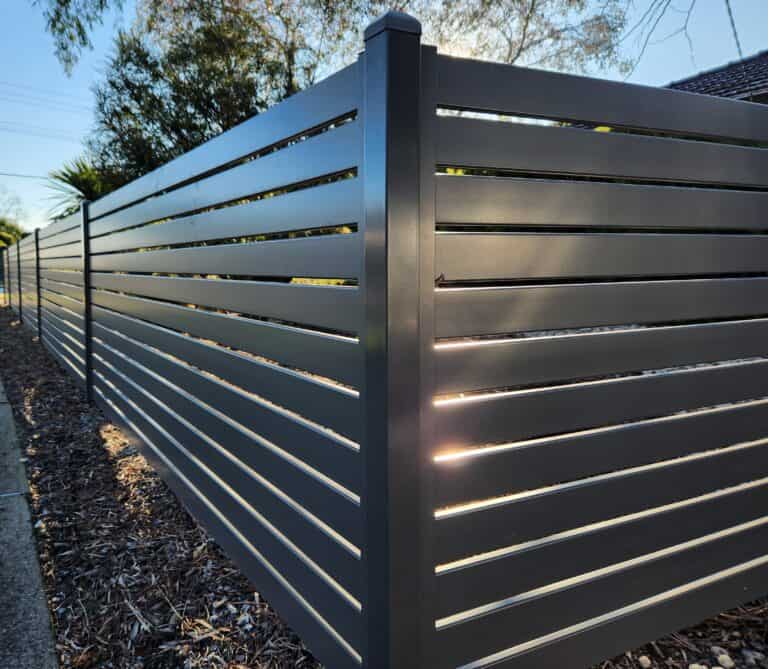
Fence for Sloped Blocks: Melbourne Fence Firm Techniques
If you have a sloped block in Melbourne, you already understand the location has its very own character. One side sits a bit greater, the ground appears to "tilt" even when you assume it is degree, and rain finds the reduced places with zero doubt. A fencing on that particular type of land requires greater than the usual straight-line reasoning. It needs a plan for exactly how the fencing line will adhere to the incline without looking shaky, developing unnecessary gaps, or putting additional stress on blog posts and rails.
Over the years dealing with fencing improves inclines, I have seen sloped websites stop working in predictable ways: the message holes get measured "by eye", the concrete is poured without bookkeeping for uneven bearing, and the fence panels wind up doing a slow wave as you stroll along the limit. After that the owner calls and asks why the fence looks penalty from one angle however incorrect from the other. It is rarely a single mistake, it is a chain of small compromises that add up.
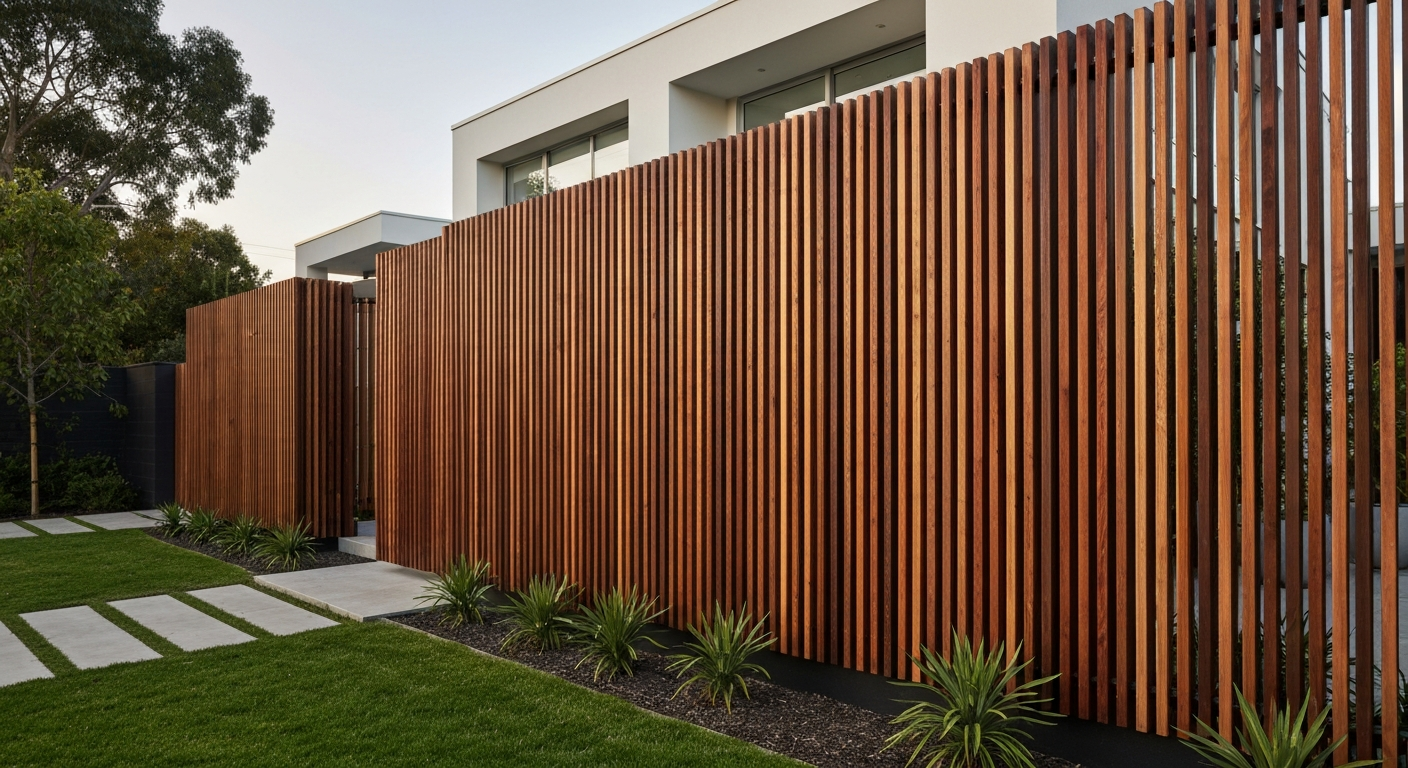
This is where a great fence firm makes its keep. With the ideal method, a sloped boundary can look intentional, cool, and strong for several years, also when the ground drops visibly over distance.
Why sloped blocks make secure fencing more difficult than they look
On a flat block, it is easy to presume the exact same procedure will certainly work everywhere: mark the boundary, dig holes at regular spacing, set messages plumb, then fit rails and panels. On an incline, each of those steps ends up being even more judgment-based.
First, "plumb" and "level" are not the very same point when the ground is uneven. An article can be plumb (upright) while the fence line still runs uphill or downhill. If you puzzle those two principles, the fencing elevation will drift, rail positionings will certainly battle each various other, and the panels will not rest correctly.
Second, sloped ground can hide vulnerable points. You might find a firmer layer under the high side and softer dirt reduced down. If the excavation depth is uniform by measurement, not by ground problems, you can end up with posts that are fine in one spot and under-supported in another.
Third, wind acts in a different way when the fence is not straight and continual in elevation. A fence that "steps" also strongly or leaves large variants in panel placement can capture wind in strange methods. That does not mean you can never ever step a fencing, it indicates you need to step it with objective, not frustration.
The objective is straightforward: maintain blog posts stable, rails appropriately straightened, and the aesthetic result constant along the line, while fulfilling the functional requirements of privacy, protection, and drainage.
The first choice: run the fence as a regular elevation, or adhere to the slope
Most sloped-fence results fall into 2 wide strategies. The "right" choice relies on what you are trying to attain, what the fencing style is, and just how steep the land in fact is.
On one end of the spectrum is a stepped look. The fencing is constructed in sections that "action" up or down, generally keeping each panel section approximately consistent in its very own span. This strategy can function well for wood paling, some Colorbond styles, and lots of types of paling fencing where the panels are discrete.
On the various other end is a raked or smoothly complying with technique. Below, panels and rails are angled so the fence surface follows the incline with fewer height leaps. This can look modern and constant, but it requires extra cautious construction and commonly extra adjustment during install, especially with picket spacing and panel framing.
In practice, Melbourne installers typically blend the two. You may rake via a superficial change over a short distance, then step where the incline comes to be recognizable, or where you need to avoid uncomfortable panel cuts.
If you have youngsters, family pets, or you are utilizing the fencing to obstruct sightlines, the visual connection matters. A tipped fencing can produce a lot more horizontal exposure through spaces if the step elevations are big. A raked fence can reduce those "line breaks" but may require specific panel setting so it does not look uneven from eye level.
Measuring correctly on an incline, not "guessing" a fence line
A sloped block penalizes careless measuring. The difference in between an excellent outcome and a hideous one can be a solitary missed reference point.
The best fencing firm approach starts with an appropriate fence line design and a height strategy. In ordinary terms, that indicates the installer works out where the boundary line will certainly be represented by the fence posts, after that checks exactly how the ground fluctuates between those posts.
On actual websites, you rapidly learn that "the incline" is hardly ever consistent. One area might drop progressively, while another section has a hidden bump or a tiny hollow that transforms the ground degree over simply a couple of message bays. A regular eyeballing technique tends to flatten those details, which is why the fence later on discloses every covert contour.
I have actually strolled back to sites after setup where an owner stated, "We just kept it straight, exact same distances." When we contrasted their line mark to the as-built measurements, the fence looked misaligned only due to the fact that the ground altered greater than the layout assumed.
A specialist setup normally consists of some mix of string lines, laser levels, and regular referral heights. The objective is not just to keep the posts upright, it is to maintain the rails in a regulated partnership per post, so the fence panels wind up where they should.
Post setup: stability is the actual structure, not the panel finish
Many people focus on the panels because that is what you see. Articles are what decide whether the fencing stays solid.
On sloped ground, you are dealing with differing dirt conditions and different excavation geometry. If you dig every opening to the exact same deepness about ground surface area, you could be establishing articles at various embed depths relative to the ground beneath. Sometimes that is fine, in some cases it is not.
A cautious set up treats embedment as a function of bearing and ground stability. That can mean much deeper excavation where soil is softer, or taking extra time to clear loosened material so the post sits in company material. You also need to consider groundwater and exactly how rainwater diminishes the block, because saturated soil can compromise edges of excavations.
Another information that matters is keeping the article really upright during concrete collection. On a slope, the lure is to "balance" a blog post to align visually. That can create a message that looks okay at the time, however it is not plumb. With time, it can shift as the concrete cures and as wind loads press at the rails.
If you have actually ever seen a fence blog post that leans ever before so a little, you understand exactly how the human eye captures it right away once you notice. That lean frequently originates from a plumb concern at established time, not from a "mysterious activity" later.
Techniques that function well for sloped blocks in Melbourne
Here are the practical methods that continually supply solid outcomes on slopes. A good installer will certainly select among them based upon the fencing kind, the pitch of the ground adjustment, and how long the border run is.
1) Stepped secure fencing with controlled intervals
Stepping is not just "reduce and go". The trick is to choose where each action takes place so that the elevation modifications are aesthetically even and the structural parts remain aligned.
With lumber, stepped construction frequently includes suitable rails so the vertical change happens slowly over numerous bays, as opposed to one abrupt cut near the middle of a panel run. That decreases stress on mounting factors and makes the fence appearance deliberate.
With metal paling or sheet-style fences, stepping can additionally be done, yet the installer might require to intend panel lengths and bracket positions in advance. If braces enter where they look practical, the step could end up as well sudden or the panel edges may not land cleanly.
The ideal stepped fences really feel regular. You need to be able to walk along and see that each modification in elevation follows the incline in a planned way.
2) Raked rails and angled leading lines
A raked fencing adheres to the incline extra smoothly. The essential method right here is controlling the angle so the leading rail and the panel framing keep aligned.
On a sloped border, you usually rake the rails, not the blog posts. Messages stay plumb. The rails and then the panels get set to match the designated gradient. This technique can look sleek, specifically on longer runs.
Trade-off: it requires precision. A small mistake in rail angle can create panel sides to drift. Then you wind up with noticeable voids in between panels that are not implied to exist, or with a top side that looks somewhat wavy. That can occur even when the articles are perfect.
3) Flexible message brackets and "integrated forgiveness"
Some setups benefit from adjustable bracket systems that enable a little activity in height and angle. When you are dealing with an incline that alters unexpectedly, change offers you a method to tweak positioning without tearing whatever out.
This is one of those methods you do not notice when it is done well. You only see it when you see a fence that looks tight along the complete run and has regular panel alignment, even though the ground certainly varies.
Trade-off: bracket systems have restrictions. If the slope is too serious, or if the panel kind does not suit raked positioning, you still require to tip. Flexible braces are not magic, they are just excellent engineering.
4) Terrain-based intending around corners and transitions
Corners are where sloped fences usually obtain unpleasant. A border run may be straightforward up until it strikes an edge, after that the ground adjustments again.
An usual professional method is to treat edges as "transition zones". Instead of attempting to lug one technique right into the edge, installers might pre-plan a small change in just how the panels sit, so the fence does not look like it is twisting.
I have seen fencings where the edge posts were set plumb, yet the rails were forced to connect at the wrong elevation. The outcome was a diagonal mismatch that came to be noticeable from road degree. It was not a substantial mistake in dimension, however it developed a visual distortion throughout the limit line.
Planning transitions additionally assists with entrance openings. Gates require proper clearances and running positioning, and slopes can make that harder.
Materials and style options that make slopes easier (or more challenging)
Not every fence design handles sloped ground the exact same way.
Timber paling can be forgiving because the pickets are discrete. You can cut and align in a way that visually hides small changes. That said, sloppy rail positioning still shows up fast.
Metal fencings can be accurate however much less forgiving if you are expecting to "make it work" on site. Sheet-style or panel-style secure fencing may call for a more deliberate preparation technique, especially if you are going for a smooth raked look.
Privacy secure fencing has a tendency to highlight alignment issues, simply because the eye tracks the consistent surface area. Ornamental pickets can hide minor abnormalities, considering that the spaces and spacing separate visual continuity.
If you are selecting a style, it aids to ask a fencing firm about their preferred approach for sloped installs. A trusted team will certainly clarify whether they anticipate tipping, raking, or a hybrid, and they will certainly talk about just how that choice influences the final look.
Concrete, water drainage, and why fence lines obtain damaged after heavy rain
On sloped blocks, drain is not a history aspect, it belongs to the fencing design. When rainfall strikes, water does not sit equally. It focuses in nadirs, streams around posts, and can threaten the edges of soft dirt if the ground is disturbed.
An expert installation thinks about water pathways while setting messages. That can mean adjusting the method the concrete relaxes the post, guaranteeing excavations are appropriately cleaned, and not overfilling gaps with improper material.
It also implies considering how you end up the ground after set up. If you leave bare dirt to remove, you may see gaps near the base of fencing lines after the next downpour. That is not constantly the fencing's fault, yet it is still a predictable outcome.
I once had a client that claimed their fencing "sank" after the period modification. We checked the articles and discovered they were still upright and solid, yet the bordering ground had rinsed enough to reveal even more of the article than before. The fencing itself was alright, however the visual appearance and the base security felt even worse. A much better regrading and base reinstatement would have protected against the sense of failure.
Common side instances on Melbourne inclines
Sloped blocks come with their very own shocks. A couple of situations turn up again and again.
Boundary lines that do not match the noticeable fencing reality
Sometimes the boundary line is not where people think it is, particularly where previous landscape design produced a ridge or cut. This can impact just how much slope you in fact have along the true fence line. A fencing can appear like it is following the land, yet the boundary might need the articles to change somewhat, altering the slope experience.
Retaining walls and raised beds
If a fencing shares a line with a preserving wall surface, you can get sudden altitude changes at the wall edge. That typically pushes the design towards stepping rather than raking, due to the fact that the fence has to transition in between two various base levels.
Services, rocks, and old footings
Melbourne dirt can be rocky or variable, specifically in cut-and-fill areas. Old footings can rest deeper than expected. When a message hole hits a rock unexpectedly, the installer needs to readjust embedment and occasionally transform spacing slightly, still keeping the fencing line consistent.
Gates and driveway tie-ins
Gate openings require clearance and regular swing. If you only concentrate on making the fence panels look right, you can end up with a gateway that drags at one side due to slope impacts. The best solutions include preparing the gate posts and placement, then working the fence bays around that fixed point.
A fast "just how a good fencing company Melbourne installer functions a slope" snapshot
This is the part lots of house owners really feel, even if they can not call it. The set up looks calm and systematic, not rushed and reactive.
Typically, a good procedure sounds like: procedure, plan the elevations between posts, decide whether the fencing will step, rake, or mix, established messages correctly and consistently, then fit rails and panels with regulated placement. The "secret" is not a trick, it is discipline.
Here is the kind of believing I seek when I evaluate a sloped fencing work:
- Confirm the planned fence line and established reference factors, not just tape the boundary.
- Check real height changes over the post bays, then select a tipping or raking strategy.
- Keep blog posts plumb and focus on secure embedment based upon ground conditions.
- Align rails to a regulated referral so panel gaps are consistent, not "whatever occurs".
- Plan shifts at edges and around gates so the fence does not turn visually.
If the set up team does refrain points like that, you can typically predict the outcome from the first few posts.
What you ought to ask before you book a sloped-block fence
If you are working with Fence companies Melbourne for a sloped block, you want questions that draw out how they will manage real-world surface modifications. Lots of fence quotes look similar in the beginning look, yet the technique matters.
You do not require to question any individual, but you must request clearness on the technique and the quality assurance. As an example, ask just how they will certainly establish posts along an incline, and whether the fencing will be stepped, raked, or hybrid.
A useful question is just how they address panel alignment and top-line uniformity. You can even ask to see images of sloped installs they have done. Good installers keep examples since they understand that proprietors will normally contrast what they get to what they have actually seen online.
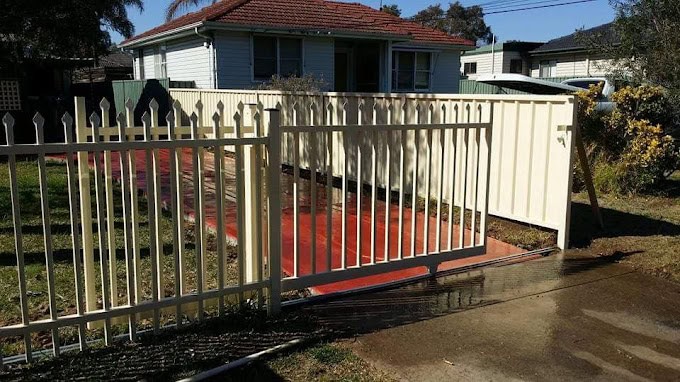
Finally, if the boundary is near drain paths, ask exactly how they approach water run-off around messages. That question often divides "we set up fences" from "we engineer fencings for your details ground".
Stepped versus raked: picking the appearance without losing performance
People commonly can be found in with a solid preference for exactly how they desire the fencing to look. That is typical. It is also worth inspecting whether the style choice matches the incline reality.
Here is a practical means to think about the trade-offs, based on what I have actually seen across numerous sites:
|Approach|Common look|Best when|Watch-outs||-- |-- |-- |--|| Tipped fencing|Clear height changes in between bays|The incline adjustments a lot more sharply, or you prefer a conventional rhythm|Step dimensions can develop larger visual spaces, quantum leaps look untidy if not prepared|| Raked fencing|Smooth follow along the incline|You desire a continuous, modern top line|Requires precise placement, errors show up as irregular panel voids|| Crossbreed|Mix of both styles|Incline differs along the limit run|Transition areas require mindful preparation, corners can become aesthetically complicated|
The ideal result is not purely aesthetic, it is a balance. If the incline is mild and constant, raking can look superb. If the incline is steep or unequal, stepping frequently looks more deliberate and stands up better aesthetically over time.
Maintenance on sloped fencings: tiny routines, fewer surprises
Even a well-built fence needs maintenance, specifically where dirt, water, and gravity do their work.
On sloped blocks, I advise focusing on the base line after heavy rainfall. Not since the fencing all of a sudden stops working, however since soil can wash away around blog posts and alter just how the fencing rests aesthetically. If you catch early issues, you can usually fix them with straightforward ground reinstatement, touch-ups, and clear drainage.
For lumber, staining and sealing routines still matter. The incline could expose one side more to sunlight and wind, which can speed up weathering. For steel, examine the fixings and surface area finishing integrity. If you notice an article location where water pools, address that before it becomes an ongoing problem.
When inclines fulfill laws and neighbour boundaries
Fence job can touch on border regulations, height limitations, and often council needs relying on your location and fencing purpose. Also if your fencing design is excellent, you do not want to construct first and ask inquiries later.
The best path is to confirm the relevant regulations prior to committing to last positioning and height. A trustworthy fencing firm will certainly be comfortable talking about the process and aiming you toward what you need to check. They will certainly also comprehend that a sloped block may influence the measured elevation at different points along the boundary, simply since the ground elevation changes.
This is another factor an elevation plan is valuable. When you know where elevation changes occur along the boundary, you can make decisions early and stay clear of pricey redesigns.
Bringing it together: a sloped fence ought to look intentional
A fencing on an incline need to not really feel like a concession. It should resemble it belongs there.
When the measuring is disciplined, the articles are secure, and the rails and panels are lined up with a clear stepping or raking technique, the fencing reads as neat and calculated, not improvised. You walk along the limit and it really feels regular, even where the ground goes down away.
If you are choosing a professional, look for the installers who talk about site-specific preparation, not just the fencing product. Ask exactly how they will handle your slope, how they will keep the line directly and the elevations managed, and what they do at changes like edges and entrances. That is where Melbourne's sloped websites divide the good from the great.
And once it is done, the actual evidence is the silent component. No wobble. No drifting panels. No "why does it look different from that side?" moments. Simply a fence that remains where it is supposed to be, with winter rainfall and the unrelenting summer season sunlight, on ground that declines to be flat.