
Speed, Appearance, Perfection: Why Cooks Love Nitrous Whip
Walk right into any major cooking area throughout a hectic solution and you will certainly see one device within quick reach of the garde manger, pastry, and also the warm line: a smooth, cooled container fitted with a nozzle. The nitrous whip is not a device, it is framework. When utilized well, it unlocks rate without sacrificing skill, and it produces appearances that are nearly impossible to accomplish any other way under the unrelenting clock of service.
I turned up in kitchen areas where everything had to justify its area, and the nitrous siphon earned its area promptly. We leaned on it for regular whipped cream, yes, but also for mouthwatering foams that set rapidly, ventilated custards that hung on the pass, and instant mousses that tasted like they took a day. Laughing gas makes this feasible, and when paired with high‑quality lotion battery chargers and disciplined strategy, the outcomes are both repeatable and remarkably nuanced.
What laughing gas actually performs in the siphon
Nitrous oxide, in some cases abbreviated as N2O, is the propellant made use of to bill the siphon. It liquifies conveniently into fat and water, particularly in chilly environments. When you press the lever, the quick pressure drop launches tiny bubbles throughout the fluid. Those bubbles develop a foam that establishes virtually immediately, stabilized by the fat, healthy proteins, or hydrocolloids in the base.
A few chemistry notes that matter in the kitchen:
- Solubility and temperature level are linked. Cold bases hold much more liquified gas, so the foam arises tighter and a lot more steady. Warm bases produce bigger bubbles and a looser foam, which can be helpful for particular sauces.
- Nitrous oxide is slightly sweet on the palate. It is not sugar, yet cups frequently perceive a softer sweet taste in lotions or foams made with it contrasted to the very same base whisked with air.
- Pressure produces structure. The siphon can create a finer, more even bubble distribution than mechanical whipping, which relies upon shear and includes larger, irregular air pockets.
That is the technological backbone behind the speed and structure cooks yearn for. It is additionally why a Nitrous Whip can turn a thin custard into a mousse, or a beet purée into a cloud that holds its shape on a hot plate.
Speed on the pass, accuracy on the plate
Service rate is not concerning moving anxiously. It has to do with getting rid of rubbing. A charged siphon does that in 3 ways.
First, it postpones labor right into preparation. You make the base in the afternoon, cool it properly, bill the siphon, and stash it cool. When the orders hit, you are no longer whipping, whisking, or folding. You are pushing a bar and plating. That transforms a two‑minute task into a two‑second one and conserves hands when you require them most.
Second, it eliminates many last‑minute variables. Hand‑whipped cream differs hugely depending on who is whisking, the bowl temperature, and timing. A siphon set to the exact same fee every time gets rid of that irregularity. Chefs respect this because a quenelle that hangs on table five may melt on table 9 if the framework is inconsistent.
Third, it provides part control. The nozzle creates a consistent ribbon or blob with a predictable volume. That makes setting you back cleaner and decreases waste. In my bread station days, changing the pavlova lotion from a mixer bowl to a siphon cut our variance in lotion use by concerning 12 percent over a month, which is not pocket change when you go through cases of dairy.
Why appearances from a siphon feel different
You can taste and feel the distinction blindfolded. A siphon foam, billed with laughing gas, is smoother on the tongue and breaks down much more easily than air‑whipped equivalents. The bubble latticework is tighter, the cut is cleaner, and the framework lasts longer in moderate conditions.
Consider 3 examples from method:
- Chantilly hanker a tart. Whisked cream usually yields a rustic, billowy structure that looks lovely however can weep on the plate after a few minutes. Siphon chantilly appears satiny, holds its edge, and can be seasoned with a lighter hand due to the fact that the laughing gas lends a perception of sweetness.
- Parmesan espuma for a risotto. Folded up foams made with a whisk can really feel heavy. A siphon foam based on an emulsion of stock, Parmesan, and a percentage of gelatin lands with even more lift, which allows the risotto remain the star while still providing a fragrant punch.
- Chocolate mousse made on the fly. Conventional mousse demands time for oygenation and setting. A siphon can take a custard base supported with a little gelatin and produce a mousse that layers beautifully in seconds, with a structure in between classic French mousse and crème légère.
These outcomes are not methods. They reflect exactly how gas under stress communicates with fat and protein networks. If you appreciate the underlying physics, you can develop textures that are both striking and stable.
The situation for a high quality whip and dependable cream chargers
Tools matter. A tough nitrous whip with well‑machined strings and a durable gasket saves you from leaks, inconsistent pressure, and migraines throughout solution. Less expensive bodies bend, valves stick, and threads misalign with use. That is not only aggravating, it is unsafe.
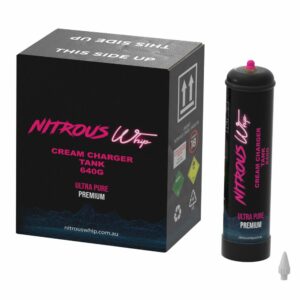
Cream battery chargers are the other half of the equation. Consistency in laughing gas pureness and fill weight converts directly right into uniformity on home plate. Substandard chargers can contain oils or moisture, which produce off aromas or undercut foams. I have examined lots side-by-side. The trusted cartridges generate a tidy hiss when piercing, no noticeable residue at the nozzle, and repeatable results charge after cost. If a vendor can not provide recorded purity requirements, maintain looking.
Brands market boldy in this area, and it can feel like sound. Look instead for a vendor that ships with batch traceability and has a credibility amongst working cooks. Numerous cooking areas keep a mix of dimensions available, from conventional 8‑gram cream chargers to larger styles for high‑volume preparation. The bigger dimensions reduce changeover time, which deserves it throughout height solution. Whether you say NitrousWhip as a brand name or nitrous whip as a group, the reasoning is the same: quality inputs yield clean foams.
Techniques that separate a passable foam from a wonderful one
You can deliver an acceptable foam with a suitable base and one charger. Excellent takes craft. These behaviors are non‑negotiable in my kitchen.
- Chill every little thing. The base, the container, and ideally the nozzle also. I aim for the base at 2 to 4 ° C. A warm siphon robs you of solubility and stability.
- Strain the base through a fine chinois. Any type of particulate will certainly block the nozzle or disrupt great bubbles. Also smooth purées conceal coarse hairs that create powerlessness in the foam.
- Charge, shake, rest. 2 fees for a one‑liter canister is my baseline for thicker lotions or custards, one fee for lighter solutions. After charging, hold the container horizontal and drink carefully, after that let it rest a few mins to equilibrate.
- Test and change. The initial press is an examination onto a cool spoon. If the foam is also loose, drink again or include another charger. If it extrudes too stiffly, your base is too thick or also chilly, not a stress problem.
- Hold at the appropriate temperature level. Cold foams stay in the reduced fridge. Warm foams sit in a water bath, typically 55 to 60 ° C, never ever higher unless the stabilizer can take the warm. Keep in mind that warmth increases gas, so warm foams emerge faster and feel lighter.
That is one listing. It gains its area due to the fact that the actions are concrete, and missing out on any of them can unravel a service.
Building bases that play well with pressure
The siphon is not magic. The base establishes the end result. Design it with structure and flavor in mind, and recognize which stabilizers behave under pressure.
Dairy foams are the most forgiving because fat and milk proteins create stable films around bubbles. Sweetened cream, crème anglaise, mascarpone blends, and crème fraîche all respond well. Keep fat in between roughly 28 and 38 percent for the majority of applications. Go lower for very light espumas, greater for dollop‑style creams.
Egg based custards can create lovely foams provided you stress them and support with a touch of jelly or agar. Too much hydrocolloid generates a rubbery foam that rips when it arrive on a plate. I favor 0.3 to 0.6 percent gelatin by weight for desserts, a touch greater for warm mouthwatering foams.
Vegetable purées call for more self-control. You require a smoother purée than you would certainly for a layered quenelle, and you generally require a stabilizer to compensate for limited fat. A small percentage of xanthan periodontal, commonly 0.1 to 0.2 percent, can assist, as can bleed powder in dairy‑friendly contexts. Emulsified fats like brownish butter or olive oil can develop rich foams, yet they require impressive straining.
Chocolate foams are a globe of their own. Cacao butter adds structure, yet heat monitoring is critical. Too hot and you damage the solution inside the container, producing oily touches at the nozzle. I cool the base to fridge temperature level and generally deploy two costs for a liter, after that hold cool till service.
Stocks and jus can be frothed, however they call for additives due to the fact that their healthy protein material is reduced. Lecithin can develop light froths externally, yet those are transient. If you desire an enduring sauce‑foam, include dairy, gelatin, or starch and think of it as a velouté‑based espuma instead of a pure stock foam.
Savory applications that earn their keep
If nitrous whips lived only in bread, half the tale would certainly be missing out on. Mouthwatering stations utilize siphons to fix concrete problems: speed on warmers, textural comparison, and clean flavor delivery.
A parmesan foam over baked mushrooms appears straightforward. The functional win is that it supplies huge umami with less salt, and it come down on home plate warm, light, and quick. We constructed a base with milk, lotion, grated aged Parmesan, a little jelly, and a steep with toasted peppercorns. Stress, chill, fee, and maintain in a 60 ° C bath. During solution it replaced a heavy cream decrease that utilized to damage on us late in the night.
A pea espuma brings springtime to a plate without stacking purée under everything. Blanched peas, a little measure of cream, a little butter, and a supported supply give you an electrical eco-friendly foam that rests pleasantly on fish or lamb. The method is paling tough and chilling quick to safeguard shade, then stressing greater than you think you need to.
Garlic aioli whipped in a siphon offers a lace‑thin, super‑even line for garnishing. Appropriate emulsion in the base is essential. If the solution is broken entering into the siphon, pressure will certainly not repair it. Done right, you obtain the taste of aioli with a lighter hand, releasing the main element to remain crisp.
Pastry standards, modernized without gimmicks
Dessert is where a Nitrous Whip wins hearts. Not since it replaces technique, however because it lets you perform with restriction at speed.
We served a citrus bavarois as a mousse in the siphon for a pop‑up where space and time were limited. The base was a timeless anglaise with jelly and yuzu juice folded right into whipped lotion. We adapted it by enhancing the gelatin somewhat and mixing as opposed to folding, after that billing and chilling. The result layered with the precision of a shaped dessert and the lightness of a sabayon, all while providing us a loads plates in a minute.
Chantilly infused with toasted vanilla hulls and a touch of crème fraîche had a clean, nearly perfumed coating when siphoned. Contrast that to a mixer bowl that picks up ambient scents and warms in between plates, especially on a small bread station.
Even traditionalists cozy to the siphon when they taste a cozy chocolate espuma over stout cake. It reviews like nostalgia on the food selection but consumes with finesse. Develop the base like a light ganache with milk, cocoa, and a controlled amount of gelatin. Hold in a bain‑marie, and the foam lands with a chocolate fragrance that flowers as it strikes the cozy cake.
Safety, responsibility, and kitchen culture
Nitrous oxide is a food‑grade gas, yet it requires respect. Kitchens that treat it casually invite troubles. The cylinder is pressurized. The cartridges are cool when pierced. A couple of concepts maintain you secure and professional.
Store chargers dry and at space temperature level. Never warm a container on straight fire. If you need a warm foam, utilize a regulated water bathroom. Evaluate gaskets on a regular basis. Replace any kind of that break or squash. If a nozzle blockages, do not require it. Depressurize securely, after that take apart and clean.
One extra reality deserves plain words. Nitro cartridges have non‑culinary uses that do not belong in a cooking area. Develop a culture that maintains food devices for food. Access to battery chargers remains with team on duty, and waste enters into a secured container. This has to do with security, legality, and regard for the craft.
Troubleshooting the concerns you will in fact encounter
Most troubles are foreseeable if you recognize the failure modes.
Leaking at the head normally originates from a cross‑threaded top or a worn gasket. Withdraw, realign, hand‑tighten with care. Do not wrench a misaligned head into Visit the website place. If the leakage lingers, change the gasket. Keep spares in the drawer.
Watery foam shows either an undercharged siphon or an unstable base. Shake delicately and attempt an additional press. If the structure is still slim, your base needs extra fat, healthy protein, or stabilizer. For milk lotions, a pinch more confectioners' sugar can help because its starch component binds some complimentary water.
Bitter or metallic notes almost always map back to poor‑quality cream chargers or polluted containers. Strip the siphon, tidy with hot water and a light cleaning agent, wash extensively, and dry. Switch over to a fresh box of battery chargers from a reputable lot. Food‑grade Laughing Gas need to not add off flavors. If it does, wonder about the supply.
Clogged nozzles generally suggest inadequate stressing or bases with coarse ingredients. Disassemble, remove the blockage, and stress the base once again with a super‑fine filter. For consistent cloggers like asparagus or artichoke purées, accept that a siphon might not be the right tool unless you travel through a very great filter press or transform the recipe.
Over tight lotion looks rather until it splits on the plate. This can originate from overcharging or bases that are too chilly and fatty. Hold the container at fridge temperature level, not in the freezer, and minimize the number of battery chargers. A little milk in the base can soften the structure.
Cost, waste, and a peaceful sustainability win
Cream chargers are a palatable, and the math issues. You will melt through a shocking number in a high‑volume restaurant. Yet the total price image usually nets out favorable when you factor in labor and waste reduction.
With whipped cream, wastage drops since you are not scraping the sides of mixer bowls and throwing out over‑whipped sets. Portion control prevents the extra blob that builds up throughout 150 covers. Preparation time changes earlier in the day when labor is less constricted. Those efficiencies are practical, not academic. In one restaurant I aided recondition, moving three sauces and two creams to siphons recuperated about 4 labor hours per hectic evening and reduced dairy waste by a third.
Recycling is non‑negotiable. Spent battery chargers are steel. Most municipalities accept them if they are fully cleared. Collect them in a dedicated bin and include them to your reusing stream. Some suppliers also use take‑back programs. It is a little step yet it adds up, especially for procedures that utilize instances of chargers each week.


Menu style with the siphon in mind
The nitrous whip is not just a back‑of‑house tool. It forms the method you consider dishes. When you can deploy a cozy espuma in secs, you can afford to make a plate that needs a last‑minute lift. When you can guarantee a secure quenelle‑like glob on a tart, you can plate tighter without hedging for slumping cream.
Ask three questions when creating with a siphon.
Does this foam enhance the primary element, or does it sidetrack? If the dish already has a vulnerable crisp or a fragile brew, a heavy foam will certainly bulldoze it. Go for comparison without swiping the scene.
Is the base robust enough for service? An excellent foam that breaks after 6 minutes is a liability. Examine the base at the temperature it will certainly be utilized and observe exactly how it behaves over 10 to 20 mins. If it cries, change or select one more technique.
Can the exact same effect be achieved more merely? The siphon is engaging, but not every component requires to be aerated. If a spoon‑napped sauce or a hand‑whipped cream offers the meal much better, pick it. Kitchen area maturity is recognizing when not to make use of an awesome tool.
A short, functional regimen for a silky vanilla chantilly
If you are new to siphons, begin with a traditional. This chantilly hits the sweet area of quickly, stable, and versatile.
- Combine 900 g heavy cream, 80 to 120 g confectioners' sugar to preference, a pinch of great salt, and the seeds of one plump vanilla shuck. Blend briefly to liquify the sugar. Pressure with a fine chinois.
- Chill the base to 2 to 4 ° C, after that put right into a one‑liter nitrous whip. Fee with one cream battery charger, drink flat ten gentle strokes, then include a 2nd battery charger and repeat. Relax the container 5 minutes in the fridge, after that check a small press. Change sweet taste or tightness in the next batch if needed.
This generates a lotion that pipelines cleanly, hangs on fruit, and resists weeping. As soon as you taste the mouthfeel, you comprehend why many bread chefs hardly ever return to hand whipping for service.
Where Nitrous Whip suits an expert cooking area's rhythm
Chefs like the nitrous whip due to the fact that it fits the pace. It sustains mise en area by enabling you to prep bases early. It supports service by supplying appearances that look made up and taste fresh. It supports consistency by decoupling key steps from the variability of human labor at peak stress.
None of this justifications sloppy practice. The siphon rewards discipline. It amplifies your understanding of emulsions, solubility, and stabilizers. With a thoughtful method, it ends up being an accuracy instrument, not a crutch.
When young cooks join my group, I hand them the siphon just after they can make a correct anglaise, a stable solution, and a smooth purée. Then I show them exactly how Nitrous Oxide changes those foundations. The lesson lands since the device honors timeless strategy while increasing what is practical under pressure.
Nitrous Whip has earned its place in the modern cooking area for three easy reasons: it is fast, it generates textures that check out as fine-tuned, and it makes excellence repeatable. If you appreciate the chemistry, invest in reliable lotion chargers, and construct wise bases, the paybacks show up on home plate and in the pace of your service. That is why chefs grab it night after evening, except show, however, for results.